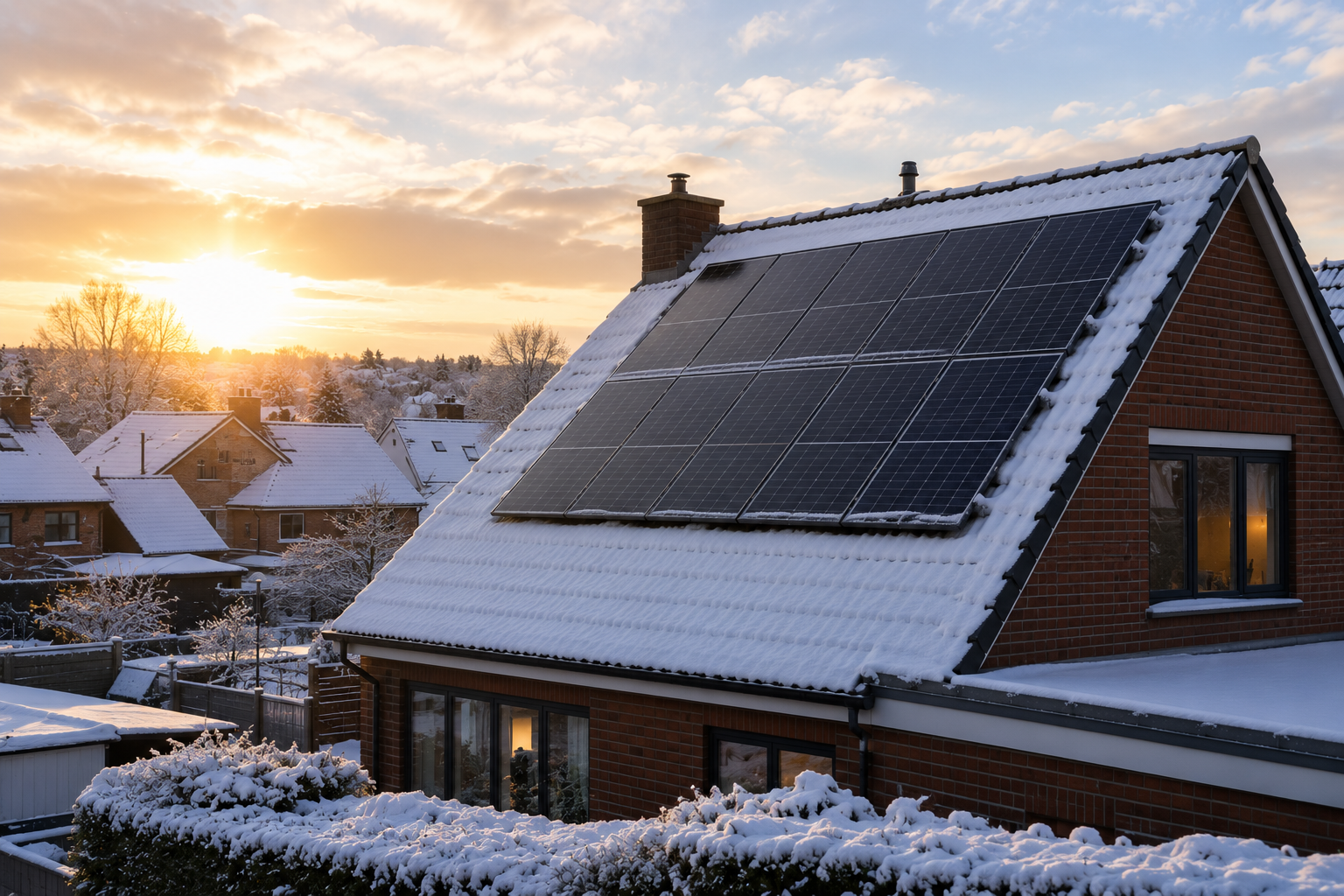
One of the biggest myths surrounding solar energy is that solar panels stop working during the winter.
It's an understandable assumption. Winter brings shorter days, colder temperatures and plenty of grey skies, so it's easy to think your solar panels won't generate enough electricity to make them worthwhile.
The reality is very different.
Modern solar panels continue producing electricity throughout the winter months, and in some conditions, they actually operate more efficiently in cold weather than they do during the height of summer.
In this guide, we'll explain how solar panels perform during a typical UK winter, what affects their output, and how you can maximise your savings all year round.
Do Solar Panels Work in Winter?
Yes — absolutely.
Solar panels generate electricity using daylight, not heat.
Many people assume solar panels need hot sunshine to work, but photovoltaic (PV) panels convert light into electricity. As long as there is daylight reaching the panels, they will continue producing power.
Even on cloudy winter days, solar panels can still generate electricity, although the output will naturally be lower than during bright summer months.
Why Winter Doesn't Stop Solar Generation
The UK receives fewer daylight hours during winter, which means solar systems generate less electricity between November and February.
However, this doesn't mean they stop working.
In fact, solar panels are often more efficient in cooler temperatures.
Unlike many electrical devices, solar panels don't perform better when they're hot. Excessive heat can slightly reduce their efficiency, so cool, bright winter days can provide excellent performance.
The biggest factor isn't temperature—it's simply the number of daylight hours available.
How Much Less Electricity Is Generated?
Solar generation naturally varies throughout the year.
A typical UK household with a 4kW solar system might expect:
| Season |
Approximate Share of Annual Generation |
| Spring |
30% |
| Summer |
40–45% |
| Autumn |
20% |
| Winter |
10–15% |
This means the majority of your annual electricity is generated between March and September.
Although winter generation is lower, every unit of electricity your panels produce is electricity you don't need to buy from the grid.
Do Cloudy Days Stop Solar Panels Working?
No.
Cloud cover reduces generation, but it doesn't stop it completely.
Modern solar panels can still capture diffuse sunlight that passes through clouds.
Depending on the weather conditions, your system may still generate between 10% and 50% of its normal output during overcast days.
That's why you'll often notice your inverter continuing to produce electricity even when the sky appears completely grey.
What About Snow?
Many homeowners worry that snow will completely shut down their solar system.
Fortunately, heavy snowfall is relatively uncommon across much of the UK.
If snow settles on the panels, generation may temporarily reduce until it melts or slides away.
Fortunately, solar panels are installed at an angle, allowing snow to naturally slide off as temperatures rise.
Their dark surface also absorbs sunlight, helping the snow melt more quickly than many people expect.
For safety reasons, it's generally best to avoid climbing onto your roof to clear snow yourself.
Does Rain Affect Solar Panels?
Rain is actually beneficial.
While it may reduce generation on the day, rainfall helps wash away dust, pollen and other debris that can build up over time.
This natural cleaning helps maintain the performance of your panels without requiring regular maintenance.
How Can You Maximise Winter Savings?
Although you can't control the weather, there are several ways to get the most from your solar panels during winter.
Use More Electricity During Daylight Hours
Running appliances such as washing machines, tumble dryers or dishwashers during the middle of the day allows you to use more of the electricity your panels are generating.
This reduces the amount of electricity you need to purchase from your supplier.
Consider Battery Storage
Adding a home battery allows you to store excess electricity generated during daylight hours for use later in the evening.
During winter, when daylight is limited, every unit of stored electricity becomes even more valuable.
Battery storage also helps increase your energy independence and reduce reliance on the grid.
Keep Your Panels Free From Shade
Winter sun sits lower in the sky, meaning nearby trees, chimneys or neighbouring buildings may cast longer shadows across your roof.
If possible, keeping panels clear from unnecessary shading can improve winter performance.
Monitor Your System
Most modern solar installations include an app that allows you to monitor generation in real time.
Checking your system regularly helps ensure everything is operating as expected and allows you to spot any unexpected drops in performance.
Are Solar Panels Still Worth Buying in the UK?
Definitely.
Although winter production is lower, solar panels are designed to generate electricity over an entire year—not just during the summer months.
When annual generation is considered, many UK homeowners can still significantly reduce their electricity bills.
With modern high-efficiency panels, 0% VAT on eligible residential installations, Smart Export Guarantee payments and rising electricity prices, solar continues to be one of the most effective home improvements for reducing long-term energy costs.
Common Winter Solar Myths
Myth: Solar panels don't work when it's cold.
Fact: Solar panels often perform more efficiently in cooler temperatures.
Myth: Solar panels need direct sunshine.
Fact: They generate electricity from daylight, even on cloudy days.
Myth: Snow permanently damages solar panels.
Fact: Solar panels are designed to withstand harsh weather conditions, including snow, frost and hail.
Myth: Solar isn't worth installing in the UK.
Fact: The UK receives enough daylight year-round for solar panels to generate significant electricity, making them a worthwhile investment for many households.
Final Thoughts
Winter may reduce the amount of electricity your solar panels generate, but it certainly doesn't stop them from working.
Modern solar systems continue producing clean electricity throughout the year, helping homeowners lower their bills, reduce carbon emissions and become less dependent on traditional energy suppliers.
The key is understanding that solar is a long-term investment. While summer delivers the highest generation, every season contributes to the overall savings your system provides.
Whether it's a bright January morning or a sunny July afternoon, your solar panels are always working to make the most of the daylight available.
Thinking About Installing Solar?
At Energy Badger, we're here to help you make informed decisions about renewable energy.
Explore our expert guides, compare the latest technologies, and learn how solar panels, battery storage and smart energy solutions can help you save money all year round.
Whether you're just starting your renewable energy journey or comparing installation options, Energy Badger is your trusted source for clear, independent advice.